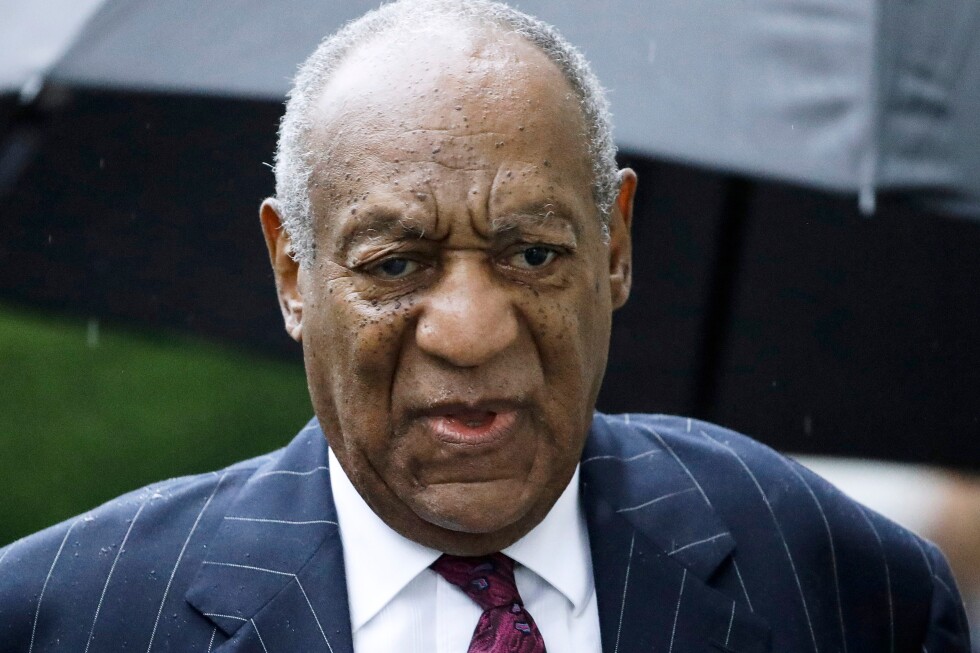
A Landmark Verdict: Donna Motsinger Awarded $19.25 Million in Cosby Sexual Assault Lawsuit
In a powerful testament to enduring justice, a civil jury in California has found Bill Cosby liable for drugging and sexually assaulting Donna Motsinger in 1972. The verdict, delivered after decades, saw Motsinger awarded an initial $19.25 million in damages, marking a significant victory for survivors of sexual abuse and adding another chapter to the disgraced entertainer's fraught legal history. This substantial judgment brings renewed focus to accountability, particularly concerning long-standing allegations against high-profile individuals.
The Los Angeles County Superior Court found Cosby, now 88, responsible for the sexual battery and assault of Motsinger, who is 84. The jury specifically awarded her $17.5 million for past damages and an additional $1.75 million for future damages, encompassing the profound mental suffering, loss of enjoyment of life, inconvenience, grief, anxiety, humiliation, and emotional distress she endured as a consequence of the assault. This detailed breakdown underscores the court's recognition of the deep and lasting impact of such trauma.
The civil ruling stands as the latest in a series of legal confrontations Cosby has faced. His career, once defined by his "America's Dad" persona, has been irrevocably tarnished by dozens of allegations of sexual misconduct. While he served nearly three years in a Pennsylvania prison on sexual assault charges before that conviction was controversially overturned in 2021, civil lawsuits continue to bring new judgments and financial repercussions, echoing the widespread calls for accountability that emerged prominently with the #MeToo movement.
The Long Road to Justice: Motsinger's Half-Century Battle
Donna Motsinger's journey to this verdict spans over fifty years, a stark reminder of the challenges survivors face when seeking justice for historic abuse. Her lawsuit detailed an evening in 1972 when she was working as a waitress at The Trident, a popular Sausalito, California restaurant frequented by celebrities, including Cosby. She accepted an invitation from Cosby to attend his show at the Circle Star Theater in nearby San Carlos.
According to her complaint, Cosby picked her up in a limousine and, en route to the venue, offered her wine and what she believed to be an aspirin. Motsinger recounted a terrifying sequence of events where the pill and wine left her incapacitated. "Next thing she knew, she was going in and out of consciousness while two men attending to Mr. Cosby were putting her in the limousine," the complaint stated. Her next clear memory was waking up in her own home, wearing nothing but her underwear, and the chilling realization that "she knew she had been drugged and raped by Bill Cosby." She explicitly stated she did not consent to any sexual contact and, being rendered unconscious, was incapable of doing so.
For decades, like countless other survivors, Motsinger faced formidable barriers, primarily strict statutes of limitations that often prevented legal action years after an assault. However, the seismic shift initiated by the #MeToo movement helped usher in critical legislative reforms across the United States. California, in particular, enacted laws that opened a window for victims to sue alleged abusers for crimes committed decades earlier. This crucial legal development provided Motsinger and others with the opportunity to finally pursue justice, proving that time, while a factor, does not negate the pursuit of accountability.
The Motsinger case, much like others that have emerged in recent years, highlights the profound impact of these legislative changes. They recognize that trauma often prevents immediate reporting or legal action, and that true justice sometimes requires a longer, more arduous path. For a deeper dive into Cosby's liability in this case, see Bill Cosby Liable for 1972 Assault, Ordered to Pay $19.25 Million.
Bill Cosby's Legal Labyrinth and the Question of "Bill Cosby Vermögen"
Bill Cosby has consistently denied all allegations of sexual assault, portraying himself and his legal team as victims of "mass vigilantism gone awry" in the wake of the #MeToo movement. Despite these denials, the sheer volume of claims and the consistent findings in civil courts paint a different picture. This latest verdict, like others before it, chips away further at any remnants of his public image and financial standing.
The $19.25 million award to Donna Motsinger naturally raises critical questions about Bill Cosby Vermögen, or Bill Cosby's assets and fortune. While the exact details of a celebrity's personal wealth are often complex and not fully public, such a substantial civil judgment has direct and significant financial implications. Unlike criminal cases, which focus on punishment through imprisonment, civil lawsuits primarily aim to compensate the victim for their suffering and losses. This compensation is paid directly from the defendant's assets.
Collecting a multi-million dollar judgment can be a challenging process, even against a wealthy individual. However, the legal system provides various mechanisms for plaintiffs to secure payment. This could involve liens on property, garnished wages (though Cosby is retired, royalty income could be targeted), or even the forced sale of assets if Cosby is unwilling or unable to pay voluntarily. The cumulative effect of numerous settlements and judgments over the past decade undoubtedly has had a profound impact on Bill Cosby's Vermögen, regardless of its original size. These legal obligations can force individuals to liquidate investments, properties, and other valuable holdings to satisfy court-ordered payments.
The Motsinger verdict serves as a stark reminder that even if criminal convictions are overturned, civil liability can still hold individuals accountable, often hitting them where it can hurt most: their financial resources. This case, alongside others, reinforces the principle that justice can manifest through different legal avenues. For more on the jury's decision, read Jury Finds Bill Cosby Responsible for 1972 Drugging and Assault.
Understanding the Wider Context: #MeToo and Legislative Reform
The Motsinger case is a powerful example of the profound societal and legal shifts instigated by the #MeToo movement. What began as a social media campaign evolved into a global reckoning, encouraging countless survivors to speak out and challenging long-held norms of silence and impunity for powerful individuals accused of sexual misconduct. The movement's impact extends far beyond public discourse, driving tangible changes in legislation across the United States and globally.
Empowering Survivors Through Legal Reform
Key legislative reforms, such as the extended statutes of limitations in California and other states, have been instrumental in enabling cases like Motsinger's to proceed. Historically, many victims found themselves time-barred from seeking justice, as the emotional and psychological trauma of sexual assault often delays reporting or the ability to pursue legal action. These new laws acknowledge that healing and readiness to confront abusers take time, ensuring that justice is not arbitrarily limited by a calendar.
- Extended Statutes of Limitations: California, for instance, passed legislation that created look-back windows, allowing victims to file lawsuits for historical sexual assaults that would otherwise have been outside the traditional timeframe.
- Increased Awareness: The #MeToo movement significantly raised public awareness about the prevalence of sexual assault and harassment, fostering a more supportive environment for survivors to come forward.
- Holding the Powerful Accountable: The movement highlighted how power dynamics often protected perpetrators, and subsequent legal actions have aimed to dismantle these protections, regardless of an individual's status or influence.
Practical Insights for Survivors
If you or someone you know is a survivor of sexual assault, understanding the current legal landscape and available resources is crucial:
- Consult Legal Professionals: Even for older incidents, it's vital to speak with an attorney specializing in sexual assault cases. Laws are continually evolving, and you might have new avenues for recourse. Many law firms offer free initial consultations.
- Seek Support: Organizations like RAINN (Rape, Abuse & Incest National Network) provide confidential support, hotlines, and resources for survivors. Therapy and support groups can be invaluable for processing trauma.
- Document Everything: If you are considering legal action, gather any potential evidence, however small, and keep detailed notes of your experiences and communications.
- Know Your Rights: Familiarize yourself with the statutes of limitations in your state. These can vary significantly, and new legislation may have created exceptions.
The Motsinger verdict is more than just a financial award; it's a profound statement about the enduring quest for truth and the power of legal reform to correct historical injustices. It reinforces the message that time may pass, but accountability, eventually, can be achieved.
Conclusion
The $19.25 million award to Donna Motsinger in her sexual assault lawsuit against Bill Cosby represents a momentous victory for justice, fifty-two years after the traumatic event. This civil verdict not only provides long-overdue compensation for Motsinger's immense suffering but also underscores the crucial impact of the #MeToo movement and subsequent legislative changes that have empowered survivors to seek accountability for past abuses. As the legal system continues to grapple with the complexities of historical allegations and the financial repercussions on individuals like Bill Cosby, this case serves as a powerful reminder that justice, though sometimes delayed, is not always denied. It reinforces the vital message that accountability for sexual misconduct, regardless of time or status, remains a fundamental pillar of a just society.